Gold Types
Gold Dore Bars from Africa — What They Are and How to Buy Them
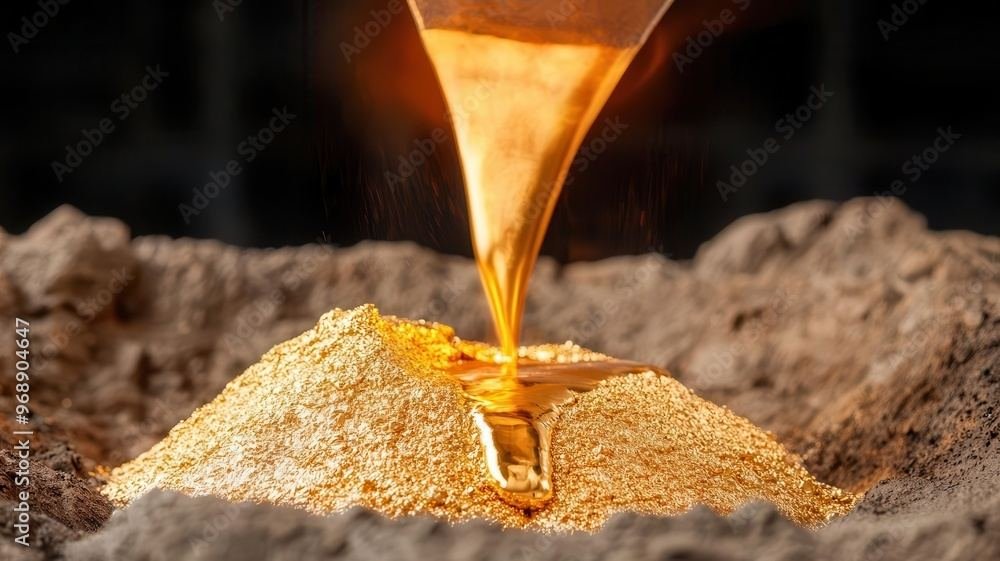
If you've researched buying African gold, you've almost certainly come across the term gold dore bar. It's one of the most common forms in which African artisanal gold reaches international markets — and understanding what it is will help you buy smarter, price correctly, and deal with refineries confidently.
This guide explains exactly what dore bars are, how they're made in DRC Congo, how they're priced, what refineries pay for them, and how to acquire them safely through a verified broker.
A gold dore bar (also written as "doré") is an unrefined bar of mixed gold and silver, produced by smelting raw gold material — nuggets, dust, or concentrate — into a solid form for easier transport and handling. The word comes from the French word for "golden."
Dore bars are not pure gold. They are the intermediate step between raw mined material and a fully refined gold bar (99.99% pure). Typical African dore bars run between 60% and 90% gold content, with silver and trace minerals making up the remainder.
💡 Key fact: Nearly all artisanal and small-scale gold from DRC Congo reaches international refineries in dore bar form. It is the standard commercial format for African gold exports.
The process begins with artisanal miners in provinces like Ituri, North Kivu, and Maniema extracting alluvial gold from riverbeds and surface deposits through panning, sluicing, or small-scale dredging. The raw material — gold dust and small nuggets — is then:
The final bar is the dore. It is solid, transportable, and ready for export to a refinery for final processing into 99.99% pure gold.
Pricing a dore bar requires understanding the gold-silver split and applying the relevant spot prices. Here's how it works:
| Component | How Priced | Example (1kg bar) |
|---|---|---|
| Gold content | % of gold × XAU/USD spot | 80% gold = 800g × spot price |
| Silver content | % of silver × XAG/USD spot | 12% silver = 120g × silver spot |
| Refinery deduction | Treatment charge (TC) | Typically 1–3% of gold value |
| Net payable | Gold + Silver value minus TC | Final buyer price |
Refineries typically pay between 96% and 99% of the contained gold value in a dore bar, depending on purity and volume. Higher-purity dore (85%+ gold) commands better terms. DRC dore bars typically run 75–88% gold, which refineries in Dubai and Switzerland actively seek.
Major refineries in Dubai (Emirates Gold, Kaloti, Al Etihad), Switzerland (Valcambi, Argor-Heraeus, PAMP), and India are the primary buyers of African dore. Their typical terms:
📊 2026 price context: With gold at record highs, even a modest 5kg dore bar at 80% purity represents over $380,000 USD in gold value at current spot prices. The economics are compelling for both buyers and sellers.
Many buyers wonder whether to buy dore directly or wait for refined bars. Here's the practical comparison:
For buyers who have a refinery relationship or are refineries themselves, dore bars are the most efficient and cost-effective format. Congo Gold Connect can supply both dore bars and refined-equivalent alluvial gold depending on the buyer's needs.
Buying dore from Africa requires the same due diligence as any African gold transaction — perhaps more, because the unrefined nature creates more room for misrepresentation. Follow these steps:
Congo Gold Connect supplies verified DRC dore bars and alluvial gold to refineries and commodity traders worldwide. Full documentation. Escrow accepted. Assay certified.
Inquire About Dore Supply → 💬 WhatsApp: +256 768 667 519Global gold demand is at record levels in 2026, driven by central bank buying, geopolitical uncertainty, and institutional investors seeking hard assets. African dore represents one of the few remaining sources of gold that can be acquired at near-spot or slightly below-spot prices, making it highly attractive to refineries looking to maximize margin.
The DRC alone produces an estimated 15–30 tonnes of artisanal gold annually, much of which is exported in dore form. With Congo's state gold trading company now active and the country's first domestic refinery operational as of early 2026, the supply chain is formalising — creating more opportunities for verified international buyers.
Congo Gold Connect sits at the centre of this market, with direct relationships with verified miners and the export infrastructure to deliver DRC dore to Dubai, Switzerland, or any international destination efficiently and compliantly.