Mining
Artisanal Gold Mining in DRC — How Miners Extract Gold
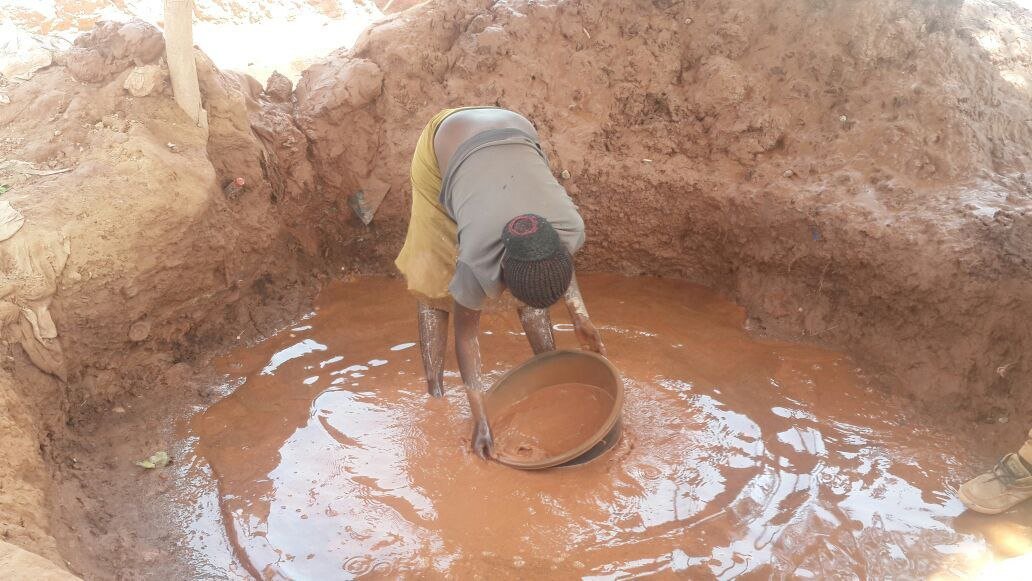
The Democratic Republic of Congo holds some of the richest gold deposits on earth, yet most of its gold is not extracted by industrial mining companies with heavy machinery and multinational financing. It is dug, panned, and sluiced by hand — by more than two million artisanal and small-scale miners (ASM) working across the eastern provinces of Ituri, North Kivu, and Maniema.
This artisanal sector produces an estimated 15 to 30 tonnes of gold per year from eastern DRC alone. That gold is the source of what international buyers, commodity traders, and refineries purchase when they buy DRC alluvial gold. Understanding how it is extracted, processed, and moved to market is essential knowledge for any serious buyer.
Artisanal mining refers to small-scale, manually intensive gold extraction carried out by individual miners, families, or small cooperatives — as opposed to large industrial operations using excavators and cyanide leaching. In the DRC context, ASM miners typically work in groups of 5 to 30 people, sharing extraction sites and dividing labour across digging, washing, and processing tasks.
The International Labour Organization estimates that ASM globally supports the livelihoods of over 40 million people, with the DRC representing one of the most significant ASM gold producing nations in sub-Saharan Africa. In eastern DRC, artisanal gold mining is not a marginal activity — it is the economic backbone of entire rural communities.
📊 Scale: Eastern DRC's ASM sector produces an estimated 15–30 tonnes of gold annually. At current gold prices above $3,000/oz, that represents over $1.4 billion in annual gold value flowing from some of the world's most remote terrain to international markets.
Panning is the most ancient and accessible method of gold extraction, and it remains widely practised along DRC's river systems — particularly in Ituri and the Kibali basin. Miners use shallow circular pans (batées) to separate gold particles from riverbed sediment.
The process works through density: gold, being approximately 19 times denser than water, sinks rapidly while lighter sand and gravel wash away with repeated swirling motion. Experienced panners can process hundreds of kilograms of gravel per day, recovering fine flakes and small nuggets. Panning requires no chemicals, no machinery, and minimal capital — just patience and skill.
The gold recovered by panning is typically fine-grained dust or flakes, often referred to as gold dust or alluvial fines. Purity ranges from 85% to 94% fineness depending on the specific deposit.
Sluicing is a step up in both productivity and capital requirement. A sluice box — a long, inclined channel lined with riffles (cross-bars) or carpet matting — is placed in or beside a water source. Gravel-bearing material is shovelled into the top of the sluice, and running water carries lighter material through while the riffles trap the denser gold particles.
A well-operated sluice can process significantly more material per hour than hand panning. Many ASM sites in North Kivu use wooden or PVC sluice boxes constructed locally, fed by diverted stream channels. The gold concentrate collected from a sluice run is then re-panned to remove remaining impurities.
Sluicing at DRC sites typically yields coarser gold — nuggets, larger flakes, and irregular chunks — alongside fine particles. Combined panning and sluicing operations recover a broad spectrum of gold particle sizes from the same deposit.
In some areas, particularly around established mining sites in Maniema and northern Ituri, miners work primary deposits — gold-bearing quartz reefs embedded in bedrock. This involves manual drilling, chiselling, and blasting to extract ore, which is then crushed and processed through rudimentary stamp mills or Chilean mills to liberate gold particles.
River dredging — using improvised suction equipment to vacuum riverbed sediment — is also practiced in accessible waterways. Dredging can access gold-rich gravels beneath the riverbed that surface panning cannot reach, but requires more capital and cooperation between miners.
Understanding the supply chain from mine to market is as important as understanding extraction itself — particularly for buyers concerned with compliance and conflict-free sourcing.
Gold is extracted by ASM miners at dig sites scattered across eastern DRC's three gold provinces. Individual miners accumulate their daily production — sometimes just grams, sometimes tens of grams — and bring it to local buying points, typically at nearby village markets or established trading posts.
Local buyers known as négociants purchase gold directly from miners at the site level. Above them sit comptoirs — licensed gold trading houses operating under DRC government oversight — who aggregate volumes from multiple négociants. This two-tier local structure is the foundation of the formal DRC gold supply chain.
The DRC government, supported by international frameworks including the OECD Due Diligence Guidance, has progressively formalized comptoir operations to improve traceability and reduce the risk of conflict minerals entering the supply chain.
Gold accumulated at the comptoir level is weighed, tested for purity, and consolidated into larger lots for export. At this stage, the gold is typically in the form of nuggets, dust, or dore bars (if a rudimentary smelting step has been applied). Export documentation — including mineral traceability tags where the iTSCi or equivalent system is in operation — is prepared.
The majority of eastern DRC's gold exports travel overland through Uganda, crossing at border posts into western Uganda and then transiting to Kampala. Uganda's capital has developed into East Africa's primary gold trading hub, with export infrastructure, warehousing, and assay laboratory services available to international buyers.
🛤️ The Corridor: The DRC–Uganda overland corridor via Kasindi/Mpondwe and Bunagana border crossings is the dominant export route for eastern DRC gold. From Kampala's Entebbe International Airport, gold moves to Dubai, Switzerland, Hong Kong, and other global refining centres.
One of the most frequently asked questions from international buyers is: what purity does DRC artisanal gold actually achieve?
The answer depends on the specific province and deposit type:
All gold entering the international market through established brokers like Congo Gold Connect is independently assayed by a certified laboratory before any transaction. The assay certificate defines the exact purity and weight — these numbers govern the price calculation relative to spot.
Buyers who understand the ASM supply chain are better equipped to evaluate what they are purchasing, assess the documentation they receive, and ensure their source is compliant with international due diligence requirements.
Working with an established broker who sources through documented, compliant comptoirs gives buyers confidence that the gold they receive:
The artisanal mining sector's output is not a niche supply — it is the primary source of DRC's gold exports and the foundation of East Africa's most active gold trade corridor. Understanding it is understanding the market.
Congo Gold Connect works with verified supply chains across eastern DRC. Assay-certified, escrow-protected, fully documented — any quantity from 100g upward.
Send an Inquiry → 💬 WhatsApp: +256 768 667 519